
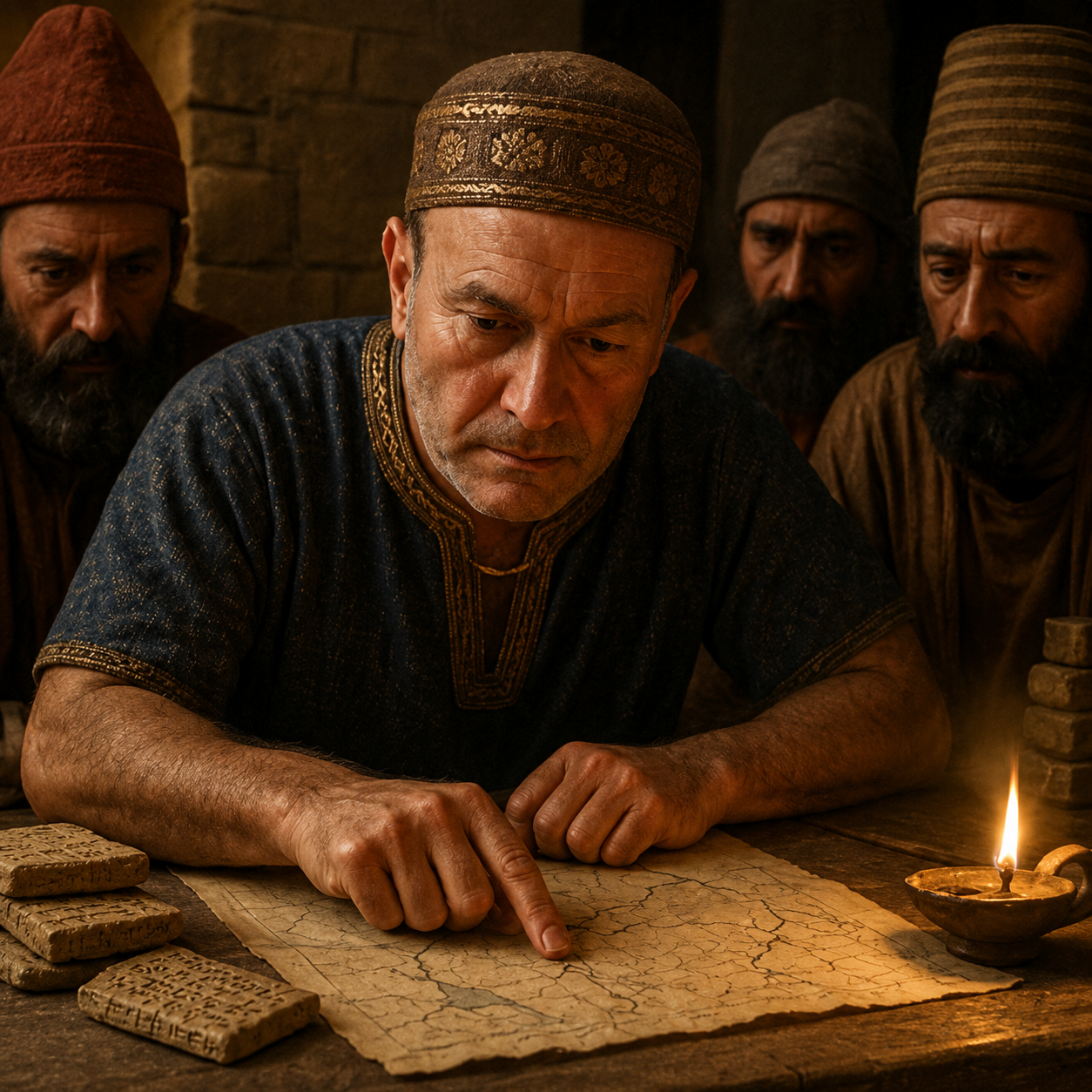
Darius the Mede as Co Regent Under Cyrus.
The figure, Darius the Mede, has long sparked debate. A coherent reading of Daniel places him not as a rival to Cyrus the Persian, but as a regional king who governed Babylon and its Chaldean heartland under the authority of the new empire. In this model Cyrus stands as the universal sovereign, while Darius exercises delegated kingship within the province that had just fallen to Persian control. The book of Daniel itself supplies the key pieces for this picture, and those pieces align with the administrative habits of the early Persian period.
Daniel 9:1 provides the frame. “In the first year of Darius the son of Ahasuerus, of the seed of the Medes, which was made king over the realm of the Chaldeans.” The wording is deliberate. Darius was made king, which suggests appointment rather than personal seizure of the crown. The territory is not the whole Medo-Persian empire, but the realm of the Chaldeans, the former Babylonian core. The sense is that of an imperial decree that places a trusted official over a newly conquered and sensitive region.
Daniel 6:1 then shows how he governed. “It pleased Darius to set over the kingdom an hundred and twenty princes, which should be over the whole kingdom.” The scope is comprehensive within the region in view. Darius does not manage a fragment. He organizes the whole Chaldean realm, dividing it under many officials so that order, tax, and justice can flourish after the shock of conquest. This matches the known Persian practice of installing governors and sub-governors to secure stability and revenue in lands that had just been subdued.
Daniel 6:28 seals the administrative logic with a linguistic detail. “So this Daniel prospered in the reign of Darius, and in the reign of Cyrus the Persian.” In Hebrew the phrase “and in the reign of” appears twice, the second time with the conjunction that binds two distinct items. The verse marks two reigns that are joined in time but not collapsed into one person. Daniel served during the reign of a regional king in Babylon and during the continuing reign of the imperial sovereign. The two reigns are concurrent, but one is supreme.
This explains why Daniel consistently distinguishes Darius from Cyrus. Darius is “of the seed of the Medes”, an ethnic note, while Cyrus is “the Persian”, a political and dynastic title. Daniel 5:31 says that Darius the Median took the kingdom, which in context reads as the assumption of authority over Babylon in the aftermath of its fall. The language of receiving the kingdom fits the pattern of appointment by a higher ruler who has already established control of the city and the empire.
Who, then, fits the historical profile? Certainly this was Gubaru, sometimes written Ugbaru in the historical tablets. The sources present a senior official who participated in the entry into Babylon and then set about installing governors across the land. That action resonates with Daniel 6:1. The chronological notes in the tablets portray an older figure, and Daniel 5:31 notes that Darius the Mede was about sixty two. The administrative behavior and the age converge. The match is not forced. It is sober and natural.
A wider ring of evidence supports this reconstruction. The Nabonidus Chronicle reports that after Cyrus entered Babylon there was peace in the city and then “Gubaru, his district officer, appointed the district officers in Babylon,” which reads like conquest followed by delegated provincial rule. The Cyrus Cylinder presents Cyrus as restoring temples and peoples across Sumer and Akkad, the sort of imperial policy that requires a strong deputy on the ground in Babylon. Contemporary usage also shows that royal titles could be shared. For a season Cambyses is attested as “king of Babylon” while Cyrus retained the broader title “king of the lands,” a clear example of joint rule within one imperial framework. A classical echo survives in Xenophon, who remembers a trusted ally named Gobryas aiding the entry into Babylon. These independent lines sit comfortably beside Daniel’s narrative of a Median ruler in Babylon who governs under Cyrus.
The question of names is not an obstacle. In the ancient world elevated officials often assumed throne names or honorifics when they took new rank. It was a normal custom in those times, especially amongst the Medes and Persians to adopt a "Royal" title. Gubaru received the Chaldean kingdom from Cyrus and adopted the name Darius for his royal function in Babylon. The book of Daniel consistently calls people by the names that signal their office in the unfolding story. What matters for Daniel is that the man who rules Chaldea is a Median by descent and a king by appointment within the Persian order.
The phrase “of the seed of the Medes” deserves careful attention. Daniel does not say that Darius has come fresh from the land of the Medes. He says that his lineage is Median. That is an ethnic marker, not a travel notice. A Median noble or commander could have been serving with Cyrus ever since the union of Medes and Persians and could be posted anywhere the empire needed him. The important point is trust, proximity to the conqueror, and proven capacity to stabilize a great city that had just changed hands.
This reading brings the parts together. Cyrus takes Babylon and becomes the universal king. He then makes a Median associate king over the realm of the Chaldeans. That associate, known as Darius in the text and plausibly Gubaru in the tablets, organizes the whole region under many officials so that order returns quickly. Daniel serves faithfully under both reigns because his wisdom is valued by both the regional king and the imperial sovereign. The narrative is steady and does not strain either language or history.
In sum, Darius the Mede is best understood as a co regent under Cyrus. He is a real person, distinct from Cyrus, Median by lineage, and installed over Babylon by imperial appointment. His actions in Daniel mirror the administrative patterns that the early Persian empire used to secure newly conquered lands. His age matches the note preserved in the book. His title reflects both heritage and office. Read this way, the portrait in Daniel is clear, and the extra biblical sources come into focus beside it.
No Comments Yet.